

Discover below what nearshoring is and how its arrival in Mexico is driving the luxury real estate market.

Why has this concept become so relevant in recent years in Mexico? Globalization brings with it changes in the way people do business around the world. In this scenario, nearshoring has emerged as a very interesting opportunity for both production companies and investors in the real estate market. Discover below why nearshoring in Mexico has become a very interesting opportunity not only for production businesses, but also for investment in the real estate market.
Near-shoring is a commercial outsourcing strategy in which a company transfers part of its production or services to third parties located in nearby countries where inputs are lower cost compared to the country of origin. By the above, we mean salaries, fuel, electricity, leasing of facilities, including taxes. This practice emerged as an alternative to offshoring, as it seeks to solve the logistical and communication problems that can arise when working with suppliers on different continents.
More competitive labor costs: Countries with highly developed economies recognize Mexico's labor force for its high degree of specialization and the quality of its human talent. In addition, the exchange rate for a company based, for example, in the United States, makes Mexico an attractive destination to increase its profitability by relocating its labor-intensive operations.
2. Proximity to the United States: Mexico is strategically located and shares a 3,152-kilometer border with the United States. Geographic proximity facilitates logistics and reduces delivery times, which is especially attractive for U.S. companies looking for a faster and more efficient way to work with external suppliers.According to El Financiero, 80% of Mexico's industrial production is destined for the United States.
3. The T-MEC: The entry into force in 2018 of the Treaty between Mexico, the United States and Canada (T-MEC) has strengthened trade and investment between these countries. The agreement has improved market access and established clearer rules for trade exchange, which benefits companies involved in nearshoring, specifically in terms of tariffs.
4. Fast and secure supply chains: Mexico has modern infrastructure and transportation systems that allow for the rapid flow of goods. In addition, nearby maritime and land transportation routes ensure safe and efficient deliveries, giving foreign companies peace of mind to meet deadlines and maximize profitability. Diverse types of industries and natural properties: Historically, Mexico has demonstrated strong performance in several industrial sectors, such as automotive, electronics and manufacturing. And not only that, in addition to the experience and specialization in these areas, the country has a privileged climate worldwide and enjoys excellent natural resources,, which makes it an extremely attractive territory to bring operations from abroad to make Mexico an attractive option for nearshoring.
The main cities in Mexico offer a cosmopolitan lifestyle, full of tradition and welcoming culture for foreigners who have decided to live in Mexico during the last few years. In this scenario, nearshoring has been responsible for foreigners from all over the world coming to Mexico and finding a cultural paradise to live in and, why not, to invest in real estate.
The real estate market in Mexico City (CDMX for foreigners who are now locals), specifically in areas in the west and center of the city, offers an attractive investment offer thanks to the lifestyle found here and its proximity to business and production centers that are mainly concentrated in the outskirts of the city (State of Mexico).
The Polanco, Roma, Condesa, Nápoles, Bosques de las Lomas and Santa Fe neighborhoods are home to foreign communities from all over the world, so many businesses and people speak English on a regular basis. The lifestyle you will find as a foreigner in one of these areas of the city is relaxed, as well as full of history, culture, entertainment and safety. The offer of schools, hospitals, parks, shopping centers, banks and access routes is also ample, so that people living here have the opportunity to carry out their daily activities in a comfortable and accessible way.

On the other hand, if you are a person who does not need to go to an office every day, there are impressive real estate projects in the country ready to move in and in the development phase to invest and live on the coasts of the country. Some ideal destinations are Acapulco and Zihuatanejo, since their proximity to the country's capital makes them relatively close destinations to live and have activity in the city. Or, there are more distant options in the south of the country where, in addition to experiencing the paradisiacal lifestyle of Tulum, you can get great returns due to the incredible capital gains of up to 11% that you will find here.

To purchase property in Mexico as a foreigner, it is essential to understand the legal requirements involved in the process. To begin with, you should be aware of the Calvo Clause, a legal mechanism that guarantees equal treatment for foreigners under Mexican law, although there are restrictions on purchasing property in restricted areas. You should also know that by means of a trust, it is possible to purchase property within these areas.
On the other hand, the required documents include a valid passport, permanent or temporary residency, proof of income, credit history, Mexican bank account, among others. In addition to taxes such as ISAI and VAT, notary and deed expenses must be considered . There are popular destinations for foreigners, such as Tulum, Puerto Vallarta, Guerrero and Merida. With the right guidance, buying property in Mexico can be a rewarding experience. At Nolab, we have experts ready to guide you through every step of the process. Find out everything you need to know about how to buy property in Mexico if you are a foreigner in 2024.
While nearshoring in Mexico is an increasingly popular strategy that offers numerous benefits for companies, it also translates into an attractive opportunity for investors looking to acquire properties in a country with a growing real estate market and an attractive lifestyle. Contact us and get personalized advice according to your case. Remember that in Nolab we have the most exclusive catalog of luxury properties in Mexico and Spain. Visit our new website and find the home of your dreams!


Receive the latest news and updates directly in your inbox.

Alfredo Obregón is the co-founder and CEO of Nolab, a real estate platform focused on investment, sales, and property management across international markets.
jul 7, 2026
5 min.
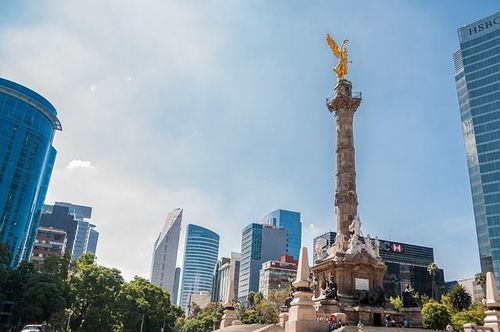
For years, to talk about investing in CDMX was to talk about opportunities. Today, more and more, it means talking about strategy and decisions with real and tangible results in a market that is constantly evolving. The city's real estate market did not stop, but it did change pace: it stopped rewarding intuition and began to demand a reading of context, understanding of the product and clarity about the moment of the cycle. Right now, in 2026, it is no longer just a matter of "investing" or "entering" CDMX, but of knowing where, how and under what logic to do so. Because the city is not growing uniformly: some areas are consolidating as stable and liquid investments, while others are beginning to reconfigure and deserve strategic attention, not impulsive bets. CDMX heading into the future: what is really driving the market? Real estate investment in Mexico City is not experiencing an isolated boom; rather, buyers are now facing an urban reorganization. Demand is increasingly concentrated in well-connected areas, with services, access to employment and real rental capacity. At the same time, the city is pushing towards verticalization, densification and the development of projects that are more efficient in size, operation and maintenance. Added to this are external factors that put pressure on demand: labor mobility, the arrival of foreign capital, international events, which results in a more informed consumer who compares, questions and prioritizes liquidity, so the market is transformed, becoming less emotional and more selective. How to read capital gains in 2026 so as not to confuse luck with strategy. Talking about capital gains without context is one of the most common mistakes when evaluating an investment. In 2026, the capital gain in CDMX is not only explained by "fashion", but by infrastructure, services, perception of safety, connectivity and urban narrative. And above all, by verifiable data that separates speculation from real growth. The analysis of the real estate market between 2023 and 2025 reveals a clear phenomenon: Mexico City is experiencing a reorganization of its demand, where consolidated premium areas maintain stability and high prices, while emerging neighborhoods capture the flow of capital displaced by the rising prices of traditional centers.
jan 7, 2026
12 min.

Discover Gta. Ruiz Giménez 5, the new fractional apartment in Madrid. Fractional ownership with 45 days of use and fractions from 335.000 €.
nov 26, 2025
6 min.