

How to overcome cultural barriers in Cross Border Real Estate investment? Succeed in a foreign market next.

The cross-border investment model offers many opportunities for foreign investors seeking to expand their businesses internationally. However, despite the economic and financial advantages, foreign investors face cultural barriers when investing in a foreign country. These cultural barriers can affect communication, negotiations and business relationships between foreign investors and local partners. Discover below what are the main cultural barriers in Cross Border investment and what are the keys to overcome them effectively and achieve success in international transactions.
Language is one of the main obstacles faced by foreign investors. This is because a language has different communication structures, as well as particular tones and colloquialisms, which can cause confusion in a negotiation.
There are different approaches a translator could take to help foreign investors, from a more local experience to a more commercial one. For real estate investment, it is highly recommended to approach a team of experts with native fluency in the local language to mitigate risks of misunderstandings.
The culture of a country consists of the set of traditions, customs and behaviors immersed in the daily actions of its society. For business, in the specific case of cross border real estate investments, cultural nuances play a fundamental role in building trusting relationships.
In order to be successful in a foreign negotiation and investment, it is always advisable to comply with the following points, which can be applied to any nationality.
It is clear that there are other types of cultural nuances in negotiations, such as price haggling, the importance of hierarchy between people in meetings or long-term commitments. For this, it is advisable to have the the support of a local partner that protects the interests of foreign investors and leads to a quick and frictionless process.

The diversity of regulations and laws that exist in each country for foreign investment can be a huge challenge for people looking to expand their investment portfolio. It is essential for investors to inform themselves about local laws and regulations before investing in a foreign country. For example, property laws and taxes may differ in different countries, which may affect investment and business results.
For example, in Spain the tax charged to property owners is known as IBI, while in Mexico it is commonly known as Impuesto Predial.
Objectively, no foreign investor can become a specialist in the local regulations of each country. Although it is recommended to do as much research as possible through reliable sources of information, it will always be more advisable to approach real estate experts in the area who can accompany and advise you at all times.
5 keys to cross border real estate investment
Cross border investments represent a new world of possibilities for people around the world who are looking for great returns in emerging markets such as Mexico and cities of great tourist interest such as Malaga, Madrid or Houston. The health crisis that the world experienced a few years ago has highlighted the need for better investment mechanisms to protect the heritage, including the need for new destinations to live in at a certain time of the year; in paradisiacal destinations and with a great recreational and cultural offer.
To overcome these cultural barriers, foreign investors must understand the cultural norms, trading styles, regulations, traditions and customs of the country in which they wish to invest. In addition, they must be open-minded and respectful of cultural differences. Hiring local advisors or consultants can also be an effective strategy to have a fast and secure purchasing process from anywhere in the world.
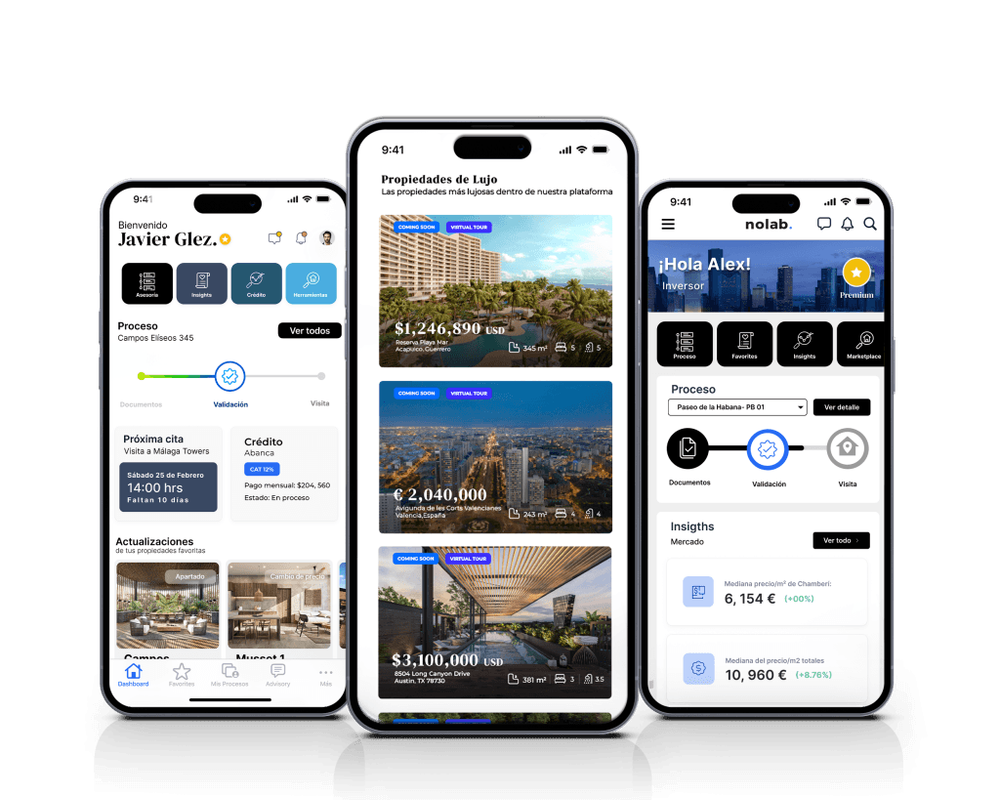
At Nolab we have developed the first platform specialized in cross border marketing of luxury real estate. It is an ecosystem that allows you to explore, manage, obtain financing through the best financial institutions and buy securely. Contact us and find out more about what we have in store for you.

Receive the latest news and updates directly in your inbox.

Alfredo Obregón is the co-founder and CEO of Nolab, a real estate platform focused on investment, sales, and property management across international markets.
jul 7, 2026
5 min.
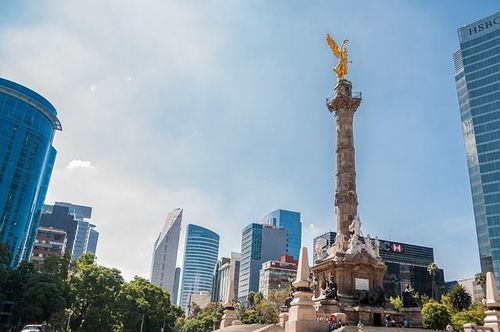
For years, to talk about investing in CDMX was to talk about opportunities. Today, more and more, it means talking about strategy and decisions with real and tangible results in a market that is constantly evolving. The city's real estate market did not stop, but it did change pace: it stopped rewarding intuition and began to demand a reading of context, understanding of the product and clarity about the moment of the cycle. Right now, in 2026, it is no longer just a matter of "investing" or "entering" CDMX, but of knowing where, how and under what logic to do so. Because the city is not growing uniformly: some areas are consolidating as stable and liquid investments, while others are beginning to reconfigure and deserve strategic attention, not impulsive bets. CDMX heading into the future: what is really driving the market? Real estate investment in Mexico City is not experiencing an isolated boom; rather, buyers are now facing an urban reorganization. Demand is increasingly concentrated in well-connected areas, with services, access to employment and real rental capacity. At the same time, the city is pushing towards verticalization, densification and the development of projects that are more efficient in size, operation and maintenance. Added to this are external factors that put pressure on demand: labor mobility, the arrival of foreign capital, international events, which results in a more informed consumer who compares, questions and prioritizes liquidity, so the market is transformed, becoming less emotional and more selective. How to read capital gains in 2026 so as not to confuse luck with strategy. Talking about capital gains without context is one of the most common mistakes when evaluating an investment. In 2026, the capital gain in CDMX is not only explained by "fashion", but by infrastructure, services, perception of safety, connectivity and urban narrative. And above all, by verifiable data that separates speculation from real growth. The analysis of the real estate market between 2023 and 2025 reveals a clear phenomenon: Mexico City is experiencing a reorganization of its demand, where consolidated premium areas maintain stability and high prices, while emerging neighborhoods capture the flow of capital displaced by the rising prices of traditional centers.
jan 7, 2026
12 min.

Discover Gta. Ruiz Giménez 5, the new fractional apartment in Madrid. Fractional ownership with 45 days of use and fractions from 335.000 €.
nov 26, 2025
6 min.