

Discover how Claudia Sheinbaum's government in 2024 will influence Mexico's real estate market and its growth opportunities.

The year 2024 marks a turning point in Mexico's politics and economy with the arrival of a new government. The presidential elections, along with the new leadership in the country's ministries, not only redefine the political map, but also generate expectations about the future of various economic sectors. In this scenario, definitely one of the sectors that may be most impacted is real estate, both residential, commercial and industrial, both in private operations and foreign investment. Below we analyze the main factors that will have an impact on the Mexican real estate market after the government transition, the opportunities that are foreseen and the challenges facing its growth.
It is considered normal that one of the main immediate effects of a change of government in Mexico is political uncertainty, which naturally generates a cautious reaction from investors. During the electoral process and in the first months of the incoming administration, investors tend to delay important decisions while waiting for greater clarity in economic policies. This can have a negative impact on the real estate market:
President-elect Claudia Sheinbaum's stance has not yet reassured foreign investors, however, we have seen similar behavior in the past with Lopez Obrador and eventually operations became regularized. However, if the new government manages to convey confidence, this will translate into a rapid recovery, especially in the high-value and high-growth areas in northern Mexico.
According to one of the most recent articles published by El Universal, it details the National Housing Plan, where it is understood that the first priority will be to support the most vulnerable sector of the population in housing matters.
This is why President Claudia Sheinbaum has stated that one of her main commitments will be to address the housing crisis. Among her 100 commitments, she highlights the need to offer accessible and sustainable housing solutions, especially for the most vulnerable sectors of the population. This social focus could generate a rebalancing of the real estate market, directing resources towards affordable and social housing projects, but it also presents challenges in the face of growing demand in the luxury and middle-income residential sector.
The direction of the new government's economic policies will be crucial for the development of the real estate market. If the incoming administration implements policies that promote investment and offer tax incentives for the purchase of real estate, it is likely to see an increase in demand and a stabilization of prices. On the other hand, decisions that increase the tax burden or introduce stricter regulations could slow the growth of the sector.
One of the most important trends for the Mexican real estate market is the nearshoring phenomenon. nearshoring. In the context of trade tensions between the United States and China, many companies are relocating their operations to Mexico. This process is generating strong demand for industrial and commercial space, especially in strategic areas close to the U.S. border and in key industrial centers such as Monterrey and Querétaro.
Real estate development in Mexico also faces structural challenges, especially in terms of energy and sustainability. The lack of adequate energy infrastructure, especially in industrial regions, may limit the growth of the sector. In addition, the pressure to comply with sustainability criteria (ESG) is increasingly relevant for foreign investors.
Another crucial factor for the real estate market will be the behavior of interest rates and the availability of mortgage credit. The current high rates have made it difficult for many buyers to access financing, affecting market dynamics. However, if the new government implements policies that stabilize the economy and reduce interest rates, this could generate a rebound in home purchases.
Mexico's real estate market is at a critical stage ahead of the 2024 government transition. Although political uncertainty may generate caution among investors in the short term, there are great opportunities for growth, especially in the industrial sector driven by nearshoring and in the residential market.
Investors and developers that manage to adapt to the new political and economic dynamics will be well positioned to take advantage of the opportunities offered by a changing market. The key will be the political and economic stability that the new government is able to convey, as well as its ability to promote the infrastructure and policies necessary for the sustained growth of the real estate sector.
Receive the latest news and updates directly in your inbox.

Alfredo Obregón is the co-founder and CEO of Nolab, a real estate platform focused on investment, sales, and property management across international markets.
jul 7, 2026
5 min.
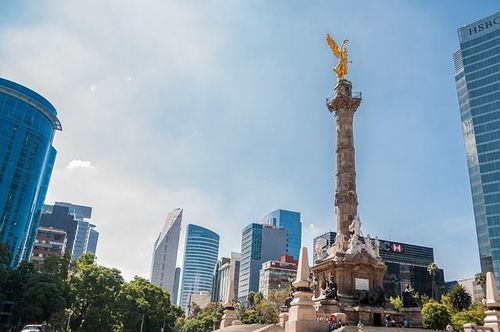
For years, to talk about investing in CDMX was to talk about opportunities. Today, more and more, it means talking about strategy and decisions with real and tangible results in a market that is constantly evolving. The city's real estate market did not stop, but it did change pace: it stopped rewarding intuition and began to demand a reading of context, understanding of the product and clarity about the moment of the cycle. Right now, in 2026, it is no longer just a matter of "investing" or "entering" CDMX, but of knowing where, how and under what logic to do so. Because the city is not growing uniformly: some areas are consolidating as stable and liquid investments, while others are beginning to reconfigure and deserve strategic attention, not impulsive bets. CDMX heading into the future: what is really driving the market? Real estate investment in Mexico City is not experiencing an isolated boom; rather, buyers are now facing an urban reorganization. Demand is increasingly concentrated in well-connected areas, with services, access to employment and real rental capacity. At the same time, the city is pushing towards verticalization, densification and the development of projects that are more efficient in size, operation and maintenance. Added to this are external factors that put pressure on demand: labor mobility, the arrival of foreign capital, international events, which results in a more informed consumer who compares, questions and prioritizes liquidity, so the market is transformed, becoming less emotional and more selective. How to read capital gains in 2026 so as not to confuse luck with strategy. Talking about capital gains without context is one of the most common mistakes when evaluating an investment. In 2026, the capital gain in CDMX is not only explained by "fashion", but by infrastructure, services, perception of safety, connectivity and urban narrative. And above all, by verifiable data that separates speculation from real growth. The analysis of the real estate market between 2023 and 2025 reveals a clear phenomenon: Mexico City is experiencing a reorganization of its demand, where consolidated premium areas maintain stability and high prices, while emerging neighborhoods capture the flow of capital displaced by the rising prices of traditional centers.
jan 7, 2026
12 min.

Discover Gta. Ruiz Giménez 5, the new fractional apartment in Madrid. Fractional ownership with 45 days of use and fractions from 335.000 €.
nov 26, 2025
6 min.