

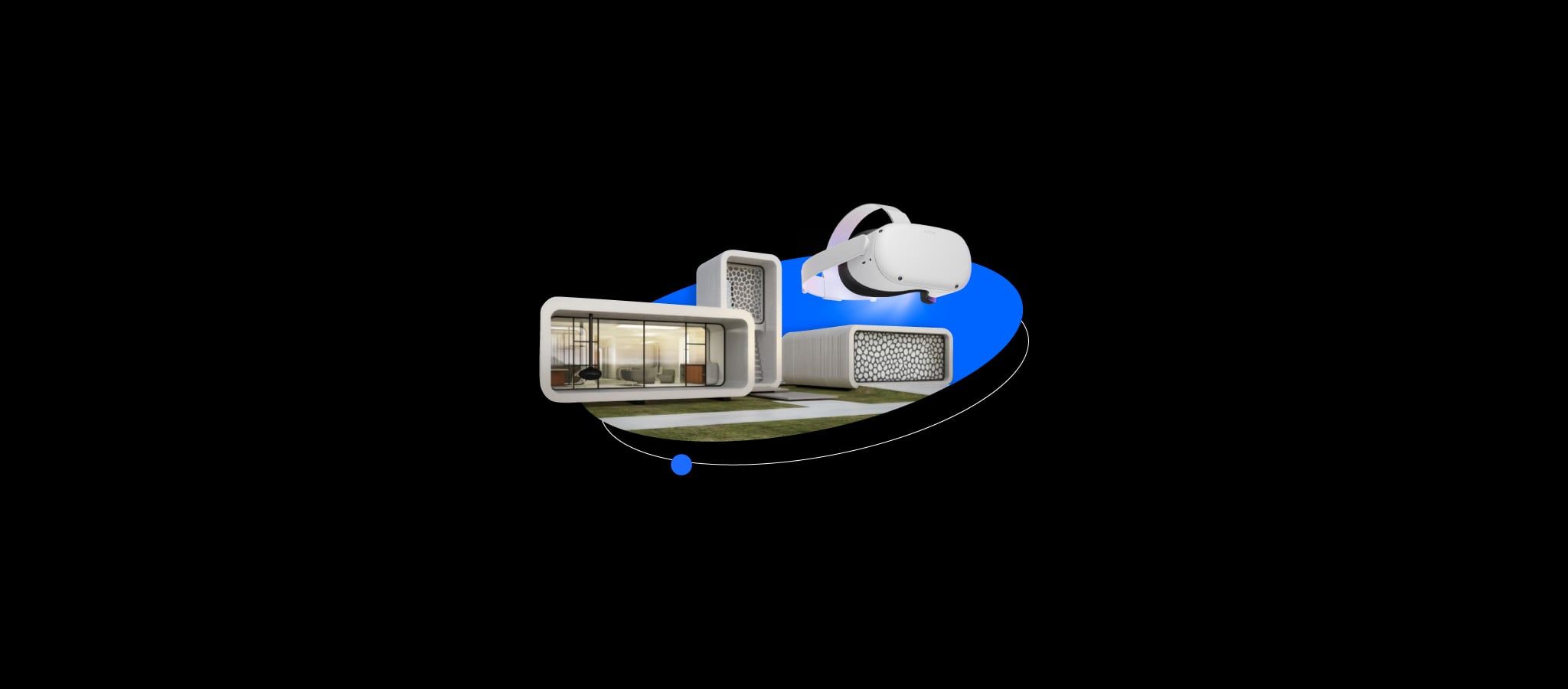
What is it about the metaverse and why is it a trend for investors and companies worldwide? To understand more about this new digital paradigm, it is important to put ourselves in the context of specialized terminology and then delve into the keys to understanding the real estate metaverse.
The notion of the metaverse came into vogue during 2021, after Mark Zuckeberg, founder of Facebook, communicated his interest in guiding the company toward the development of digital ecosystems for the interaction of people. Even going so far as to legally change the name of the company "Facebook" to "Meta. However, the metaverse concept has been around for more than a decade in platforms such as Second Life.
The reality is that, globally, all work sectors are undergoing a digital transformation. This phenomenon can be seen from new Fintech companies and Startups specialized in offering new financial solutions, to more traditional industries that have decided to safeguard a percentage of their assets in cryptocurrencies. These events have led to a new market that emerges entirely in a digital environment and in which the real estate metaverse has become very relevant.
On the one hand we have Blockchain: a technology that allows an unalterable record of information. This is achieved by building blocks of information, one on top of the other, which makes it virtually impossible to manipulate data, and also triggers an instant alert on any hacking attempt. This new disruptive technology has been used mainly for the development of cryptocurrencies such as Bitcoin, Ethereum, Solana, Tether, Binance, XRP and many more.
On the other hand, we could also talk about solutions with artificial intelligence, digital wallets and biometrics to validate a person's identity in the digital ecosystem. With these possibilities we would be talking about the integration of digital credentials, ideal to encourage the use of Smart Contracts, either in the metaverse or in the real world.
The metaverse is currently being developed by several companies. The main ones at the moment are The Sandbox and Decentraland. During November 2021, real estate company Republic Realm purchased 792 parcels of land in The Sandbox metaverse for an estimated $4.2 million. As more people and companies join the metaverse interactions, the surplus value of virtual land will continue to increase.
Every day, more and more traditional companies are investing efforts to have a presence in the different metaverses. For example, last year during the confinement, online concerts were seen on platforms such as Fortine. Another great example is Decentraland, where the first large virtual luxury shopping mall is under development. Brands such as Dolce & Gabbana, Etro, Tommy Hilfiger, Estée Lauder and Elie Saab are investing millions of dollars for a space.
In recent years, the real estate market has adopted new technologies to improve the user experience. For example, virtual tours, 3D imaging and blockchain to decentralize real estate information so people can make better buying decisions in real time.
That is why there are two options in the metaverse: The first would be to replicate a space that exists in real life, with this a person could travel through an entire city on the other side of the world without having to leave home. The second is oriented towards the development of 100% virtual properties, an excellent example of which is the company KEYS which develops luxury and completely disruptive mansions.
And you... would you like to invest in a property of this type? Remember that in Nolab we have real luxury properties that you can purchase for sale and pre-sale. One of our real estate agents is ready to answer any questions you may have at any time.
Receive the latest news and updates directly in your inbox.
Alfredo Obregón is the co-founder and CEO of Nolab, a real estate platform focused on investment, sales, and property management across international markets.
jul 7, 2026
5 min.
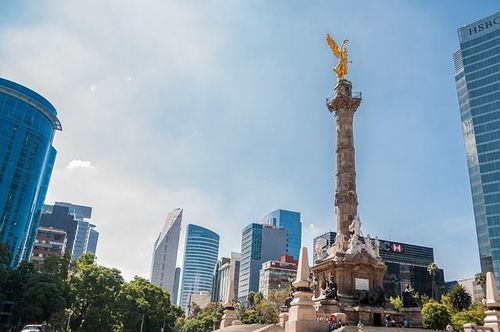
For years, to talk about investing in CDMX was to talk about opportunities. Today, more and more, it means talking about strategy and decisions with real and tangible results in a market that is constantly evolving. The city's real estate market did not stop, but it did change pace: it stopped rewarding intuition and began to demand a reading of context, understanding of the product and clarity about the moment of the cycle. Right now, in 2026, it is no longer just a matter of "investing" or "entering" CDMX, but of knowing where, how and under what logic to do so. Because the city is not growing uniformly: some areas are consolidating as stable and liquid investments, while others are beginning to reconfigure and deserve strategic attention, not impulsive bets. CDMX heading into the future: what is really driving the market? Real estate investment in Mexico City is not experiencing an isolated boom; rather, buyers are now facing an urban reorganization. Demand is increasingly concentrated in well-connected areas, with services, access to employment and real rental capacity. At the same time, the city is pushing towards verticalization, densification and the development of projects that are more efficient in size, operation and maintenance. Added to this are external factors that put pressure on demand: labor mobility, the arrival of foreign capital, international events, which results in a more informed consumer who compares, questions and prioritizes liquidity, so the market is transformed, becoming less emotional and more selective. How to read capital gains in 2026 so as not to confuse luck with strategy. Talking about capital gains without context is one of the most common mistakes when evaluating an investment. In 2026, the capital gain in CDMX is not only explained by "fashion", but by infrastructure, services, perception of safety, connectivity and urban narrative. And above all, by verifiable data that separates speculation from real growth. The analysis of the real estate market between 2023 and 2025 reveals a clear phenomenon: Mexico City is experiencing a reorganization of its demand, where consolidated premium areas maintain stability and high prices, while emerging neighborhoods capture the flow of capital displaced by the rising prices of traditional centers.
jan 7, 2026
12 min.

Discover Gta. Ruiz Giménez 5, the new fractional apartment in Madrid. Fractional ownership with 45 days of use and fractions from 335.000 €.
nov 26, 2025
6 min.