

From location to desired annual yield: explore in depth how to set a realistic rental price for your property.

The process of setting the rental price of a property can be complex if a prior study is not carried out that takes into account factors such as expected yields, market trends and similar properties. Getting this first step right is key to benefiting your long-term return on investment. Below we will explore these key factors and provide you with practical recommendations to achieve a competitive and realistic price.
Establishing a fair and competitive price for your property in the real estate rental market should be a priority for any landlord seeking this type of operation as a way to obtain returns. The rental price is not an arbitrary figure; it should be modeled primarily by elements that reflect the intrinsic characteristics of a property, as well as by what the market and similar rental properties dictate. Let's look at some of these factors below:

Location is one of the most relevant factors to define the rental price of your property. For example, properties in downtown areas with solid infrastructure and services tend to have a higher rental price than those in peripheral locations or with limited services. To give a practical example: in Mexico City, properties located in neighborhoods such as Roma, Condesa, Polanco, and in delegations such as Benito Juárez, Coyoacán, Miguel Hidalgo and Cuajimalpa are much more desirable for renting. The properties located within these areas have avenues and streets of great mobility, as well as public transportation at hand (subway, metrobus, RTP, among others), and are also located near the main financial and work centers, such as Polanco, Av. Revolución, Av. Paseo de la Reforma, Santa Fe, among others.
Naturally, the total m2 of a property determines better interior spaces. As long as there is a larger total living area (note: total living area does not include terraces, roof gardens, warehouses or parking spaces), such property will be more attractive since it implies a larger number of rooms or the size of the minimum essential rooms: bedrooms, kitchen, bathrooms and main room.
The characteristics of a property directly influence the rental cost of a property, and among the most relevant characteristics we find issues such as number of bathrooms, bedrooms and parking spaces. We also take into account aspects such as whether the roof garden is private, whether the property has a terrace, and last but not least, the quality of materials, finishes and interior and exterior design of the property.
These include amenities such as: swimming pool, playground, internet in all common areas, work spaces, shared roof garden, lobby, fire pit and more.
Well-maintained properties tend to have a higher rental price compared to those in poor condition, as it involves making repairs and this could cost the tenant money.
The demand for rental properties in a given area has a lot to do with the final price. In order to know this very influential factor, the ideal thing to do is to research in different property rental portals in your area or, alternatively, hire a specialist in the promotion of properties for rent.
The expected annual return on your rental property is a key point in determining the price. This aspect was not mentioned in the previous points as it requires further analysis. Let's take a look at it below.
Buying a property to lease it out is an investment technique that has existed for hundreds of years. The concept of leasing a property is known to date back to ancient Rome, and having your expected annual return on investment can make or break this investment method. But let's go by parts: by yield we refer to the profitability that an owner can expect from his rental property, and it may vary according to the factors we saw above.
The desired annual yield varies according to the objectives and circumstances of each owner. However, generally speaking, a good yield for a leasehold property is usually in the range of 5% to 10% of the total value of a property. This range provides a balance between stability and profitability, and is commonly accepted in the real estate world.
Practical example: if you have a property with a value of 1 million pesos, and you wish to obtain an annual yield of 10%, the monthly rental value should be $10,000.00 MXN. However, the percentage of yield varies according to the location and total value of the property.
Determining an appropriate rental price requires a methodical approach. The following are some of the most common methods used by owners and investors:
Establishing an effective rental price goes beyond applying formulas. Here are some practical tips:
Establishing the ideal rental price is a multifaceted process that requires careful consideration of several factors. By using sound methods, conducting market research and being proactive in property maintenance, owners can achieve competitive and realistic rental rates that optimize their long-term investment. The key lies in the balance between market conditions and the unique characteristics of the property.


Receive the latest news and updates directly in your inbox.

Alfredo Obregón is the co-founder and CEO of Nolab, a real estate platform focused on investment, sales, and property management across international markets.
jul 7, 2026
5 min.
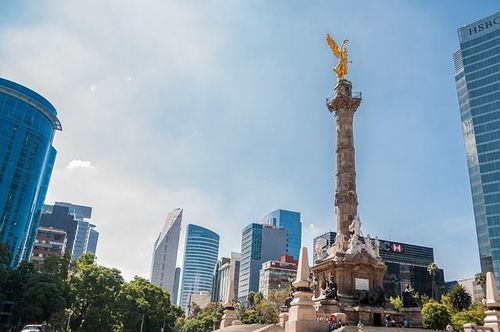
For years, to talk about investing in CDMX was to talk about opportunities. Today, more and more, it means talking about strategy and decisions with real and tangible results in a market that is constantly evolving. The city's real estate market did not stop, but it did change pace: it stopped rewarding intuition and began to demand a reading of context, understanding of the product and clarity about the moment of the cycle. Right now, in 2026, it is no longer just a matter of "investing" or "entering" CDMX, but of knowing where, how and under what logic to do so. Because the city is not growing uniformly: some areas are consolidating as stable and liquid investments, while others are beginning to reconfigure and deserve strategic attention, not impulsive bets. CDMX heading into the future: what is really driving the market? Real estate investment in Mexico City is not experiencing an isolated boom; rather, buyers are now facing an urban reorganization. Demand is increasingly concentrated in well-connected areas, with services, access to employment and real rental capacity. At the same time, the city is pushing towards verticalization, densification and the development of projects that are more efficient in size, operation and maintenance. Added to this are external factors that put pressure on demand: labor mobility, the arrival of foreign capital, international events, which results in a more informed consumer who compares, questions and prioritizes liquidity, so the market is transformed, becoming less emotional and more selective. How to read capital gains in 2026 so as not to confuse luck with strategy. Talking about capital gains without context is one of the most common mistakes when evaluating an investment. In 2026, the capital gain in CDMX is not only explained by "fashion", but by infrastructure, services, perception of safety, connectivity and urban narrative. And above all, by verifiable data that separates speculation from real growth. The analysis of the real estate market between 2023 and 2025 reveals a clear phenomenon: Mexico City is experiencing a reorganization of its demand, where consolidated premium areas maintain stability and high prices, while emerging neighborhoods capture the flow of capital displaced by the rising prices of traditional centers.
jan 7, 2026
12 min.

Discover Gta. Ruiz Giménez 5, the new fractional apartment in Madrid. Fractional ownership with 45 days of use and fractions from 335.000 €.
nov 26, 2025
6 min.