

How much does it cost to deed a property in Mexico: discover the characteristics of the process and the difference with the RPPyC registration.

Acquiring a property, whether it is a house or an apartment, is an extremely important step for most people in the world. It is important to know that during the acquisition process there are essential legal steps to prove the legality of the purchase. In this scenario,the title deed in Mexico implies not only the formalization of the transaction, but also the fulfillment of a series of requirements and the payment of various costs and taxes. Find out below how much it costs to deed a property in Mexico, the requirements involved, the difference between deeding and registration in the public registry of property.
The cost of deeding a property in Mexico can vary considerably depending on the location, land use and value of the property in question. In general terms, the cost can range from 4% to 7% of the total value of the property. In addition, these costs include notary fees, taxes, duties and the appraisal:
It is important to keep in mind that deed costs vary depending on each state of the Mexican Republic, for example:
The notary is the professional in charge of authorizing the deed of sale and carrying out the registration process in the Public Registry of Property. Fees vary according to the state and the value of the property, usually ranging between 1% and 2% of the value of the property.
The process of deeding a property in Mexico is simple as long as the property has been acquired with full legality in the process. It involves a series of requirements that buyers and sellers must present to the notary. These requirements can vary, but in general terms include:
It is common for there to be confusion on this issue. The answer is no, the registration of a property in the public registry of property is not equivalent to a deed. The deed is the process that formalizes a legal act, such as purchase and sale, donation, inheritance, usufruct or easement. Registration in the public land registry is the subsequent step that officially registers the property in the name of the new owner.
The deed is essential to guarantee the legality of the transaction, and is the step prior to the registration in the Public Registry of Property. registration in the Public Registry of PropertyIt is a process that grants legal validity to the property, allowing third parties to know the legal status of the property.
Acquiring a property in Mexico involves more than just paying for the property. Deeding a property requires an understanding of the costs involved, the necessary requirements and the crucial difference between deeding and registration in the public registry of property. This process, although it can be complex, guarantees the legality and ownership of the property, providing legal certainty to those who acquire it.

We recommend you to have a notary you trust, request quotes from several notaries, gather all the requirements in advance and read the deed carefully before signing. By being prepared and understanding the details of the process, buyers can approach the deed to a property in Mexico with confidence and security.
Remember that in Nolab we have 100% verified properties for pre-sale and immediate delivery. Contact us and find out more about our catalog to buy a luxury property in Mexico, Spain or USA.

Receive the latest news and updates directly in your inbox.

Alfredo Obregón is the co-founder and CEO of Nolab, a real estate platform focused on investment, sales, and property management across international markets.
jul 7, 2026
5 min.
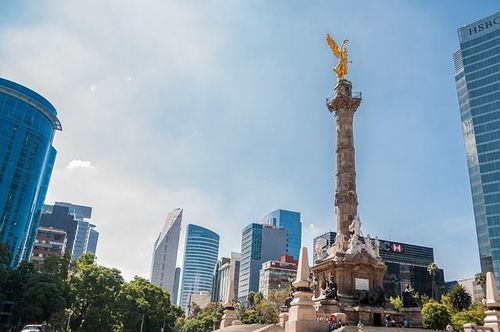
For years, to talk about investing in CDMX was to talk about opportunities. Today, more and more, it means talking about strategy and decisions with real and tangible results in a market that is constantly evolving. The city's real estate market did not stop, but it did change pace: it stopped rewarding intuition and began to demand a reading of context, understanding of the product and clarity about the moment of the cycle. Right now, in 2026, it is no longer just a matter of "investing" or "entering" CDMX, but of knowing where, how and under what logic to do so. Because the city is not growing uniformly: some areas are consolidating as stable and liquid investments, while others are beginning to reconfigure and deserve strategic attention, not impulsive bets. CDMX heading into the future: what is really driving the market? Real estate investment in Mexico City is not experiencing an isolated boom; rather, buyers are now facing an urban reorganization. Demand is increasingly concentrated in well-connected areas, with services, access to employment and real rental capacity. At the same time, the city is pushing towards verticalization, densification and the development of projects that are more efficient in size, operation and maintenance. Added to this are external factors that put pressure on demand: labor mobility, the arrival of foreign capital, international events, which results in a more informed consumer who compares, questions and prioritizes liquidity, so the market is transformed, becoming less emotional and more selective. How to read capital gains in 2026 so as not to confuse luck with strategy. Talking about capital gains without context is one of the most common mistakes when evaluating an investment. In 2026, the capital gain in CDMX is not only explained by "fashion", but by infrastructure, services, perception of safety, connectivity and urban narrative. And above all, by verifiable data that separates speculation from real growth. The analysis of the real estate market between 2023 and 2025 reveals a clear phenomenon: Mexico City is experiencing a reorganization of its demand, where consolidated premium areas maintain stability and high prices, while emerging neighborhoods capture the flow of capital displaced by the rising prices of traditional centers.
jan 7, 2026
12 min.

Discover Gta. Ruiz Giménez 5, the new fractional apartment in Madrid. Fractional ownership with 45 days of use and fractions from 335.000 €.
nov 26, 2025
6 min.