

Alonso de Garay shares with us the creative process and sources of inspiration that have led him to become a reference in Mexican architecture.
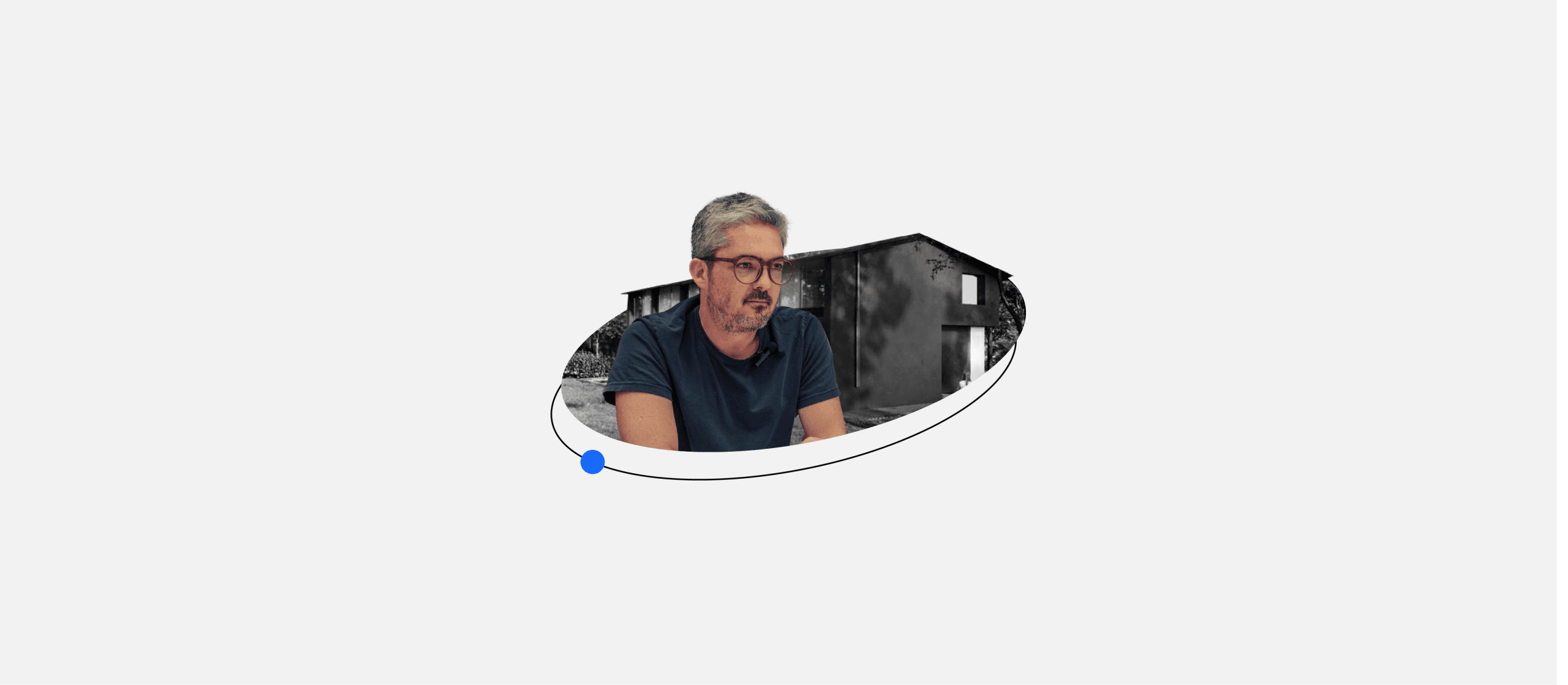
What defines an architect's success? Why do projects develop in a certain way? Where does the inspiration to create large-scale works of art come from? In an interview with Nolab Alonso de Garay shares his perspective as an experienced architect in Mexico and the world.
Architecture should speak of its time and place, but yearn for timelessness. Frank Gehry, winner of the Pritzker Prize.
In 2013 Alonso de Garay, after having worked in the office of Norman Foster and living for several years in New York, decided to open his firm ADG Workshop on his return to Mexico.
During his stay in the United States, a turning point occurs in his professional career where he realizes that it is time to embark on his own path.
Thus begins a history of successes, challenges and projects of national and international reference that have given him the opportunity to experience and demonstrate that architectural talent is a reality in Mexico.
In Alonso's words: "What best describes our work is the design process we follow... it is not an architecture that seeks to make and follow trends. It is simply an architecture that seeks to be as honest as possible with the project, with the client and with the site. We studied each of those variables very well and tried to come up with the most sensible solution for us."
De Garay says that one of his main sources of inspiration during the development of a project is the environment. The qualities of the space where a new project is to be built are critical to deciphering how the spaces will actually function.
While the architect's initial vision should inspire the upcoming work, it should always be an obligation to design and develop a space in function of the site, one that makes sense and is useful.
Beauty comes as a consequence of having a well-done design process.Alonso de Garay, founder of Taller ADG.
For Alonso and his team, methodology and efficiency were decisive factors in the survival of their projects during Mexico's major pandemic crisis. Adapting the dynamics of a workshop where the vast majority of activities are performed manually to a digital environment was a challenge that opened new vistas in their designs.
"I remember before the pandemic, making a building with a balcony, it was outside normal standards. It only increased the price of the apartment and the user had to clean it constantly. But in the middle of the pandemic, what anyone would have given to have that little balcony where you could go out and breathe air... you start to find value in things that before, it seems, didn't have it."
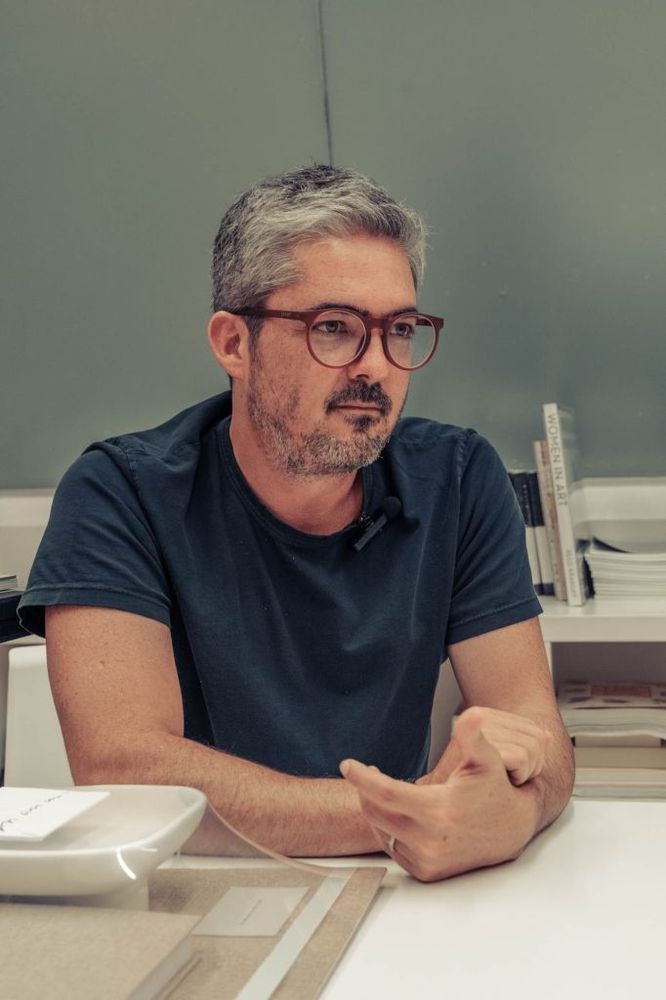
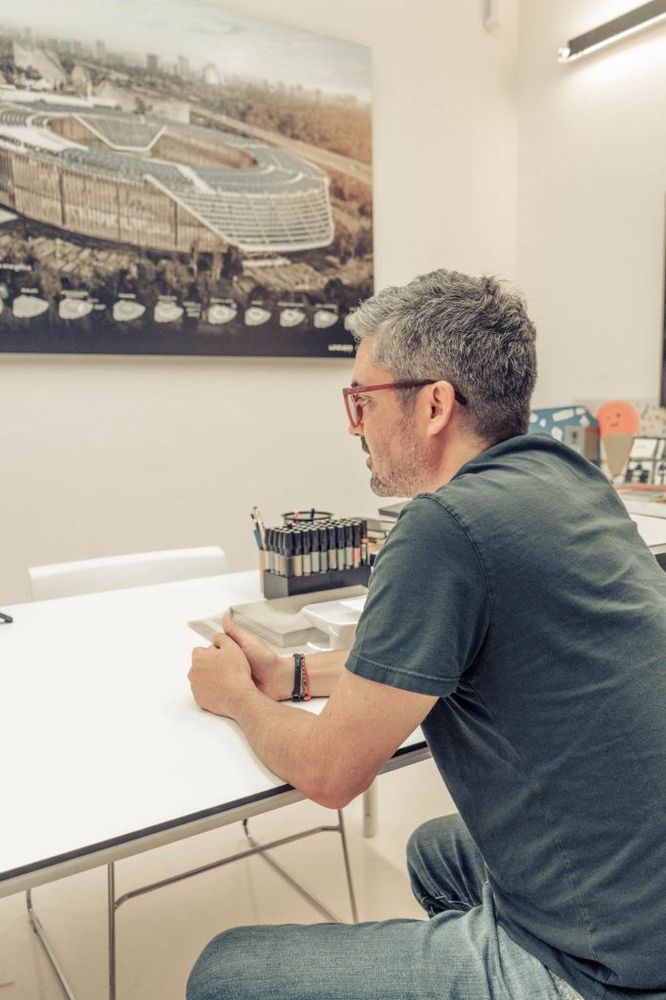
Alonso's personality and experience have been important factors in the development of innovative projects in Mexico. Much of his interest in rethinking and reevaluating Mexico's urban landscape can be seen in his studio's constant initiative to participate in competitions and tenders for representative works such as the new CDMX airport and MUTEC.
On the other hand, social awareness has been a key element in artistic and architectural creation. Shortly after the tremor that shook Mexico in 2017, Natalia Lafourcade and Alonso de Garay decided to join forces to recover the cultural space Son Jarocho Documentation Center in Jáltipan de Morelos, Veracruz.
This project represented an important challenge in terms of funding the work and a series of concerts were held with the participation of figures such as Mon Laferte, Carlos Rivera and Augusto Bracho.
For Alonso, the Son Jarocho Documentation Center is one of the best examples to communicate that a different architectural proposal is not just for a privileged social sector. And it is fundamental to represent how mankind has evolved its way of living.
Promoting public infrastructure and decent housing for people will always be a reason to continue developing unique and accessible projects.
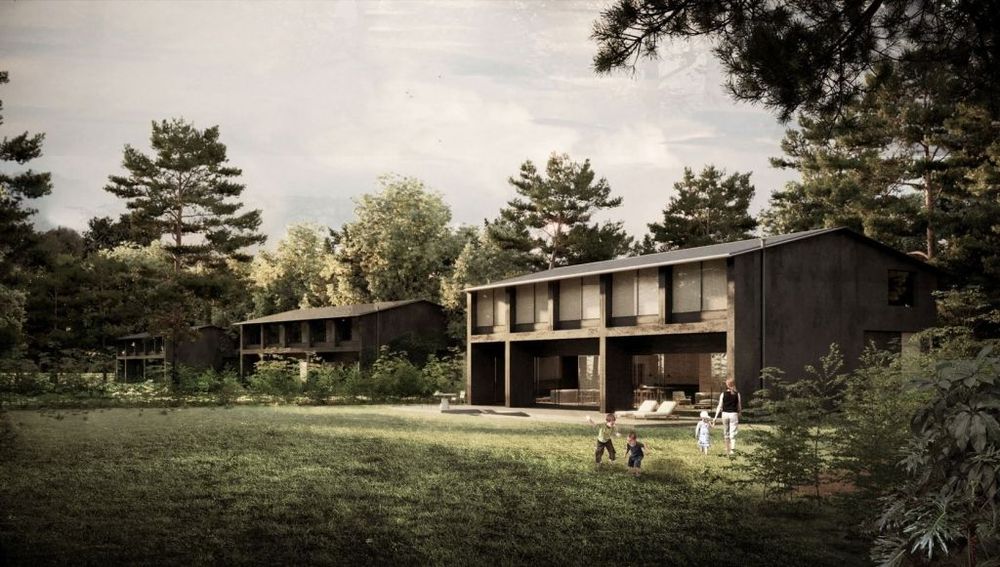
There is no doubt that standards have changed and today luxury is no longer necessarily opulence, but can be translated as high quality spaces, design proposal, location and functionality with the environment.
Valle de Bravo, in that sense, turns out to be an idyllic scenario to develop disruptive and unique real estate projects for people looking for new living experiences. All this without having to travel long distances.
The flatness of Avándaro, the woodland surrounding the area and the orientation to the sun were key elements in achieving good lighting, eliminating internal humidity in the residences and achieving an atmosphere of adequate habitability.
Looking to the future, Alonso shared with us the desire to create new living experiences oriented to the pleasure of living with a focus on innovation and functionality.
Classic and contemporary play with each other to create a balance and harmony of spaces that promote the interaction of a central community. All of this can be done in a relatively small space, but it makes the most of its resources and possibilities.
We loved collaborating with Alonso and his team for the development of this material, and we hope you enjoyed learning more about his creative process.
Remember that in Nolab we have at your disposal the best properties in Valle de Bravo so you can live the adventure to the fullest. Contact us at to find the home of your dreams.
Receive the latest news and updates directly in your inbox.
Alfredo Obregón is the co-founder and CEO of Nolab, a real estate platform focused on investment, sales, and property management across international markets.
jul 7, 2026
5 min.
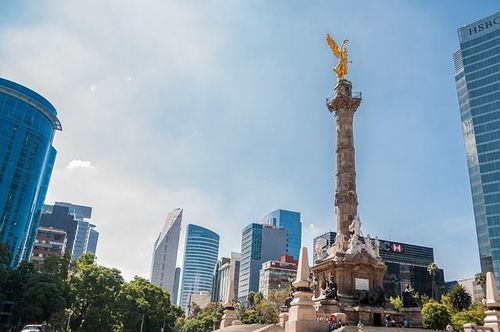
For years, to talk about investing in CDMX was to talk about opportunities. Today, more and more, it means talking about strategy and decisions with real and tangible results in a market that is constantly evolving. The city's real estate market did not stop, but it did change pace: it stopped rewarding intuition and began to demand a reading of context, understanding of the product and clarity about the moment of the cycle. Right now, in 2026, it is no longer just a matter of "investing" or "entering" CDMX, but of knowing where, how and under what logic to do so. Because the city is not growing uniformly: some areas are consolidating as stable and liquid investments, while others are beginning to reconfigure and deserve strategic attention, not impulsive bets. CDMX heading into the future: what is really driving the market? Real estate investment in Mexico City is not experiencing an isolated boom; rather, buyers are now facing an urban reorganization. Demand is increasingly concentrated in well-connected areas, with services, access to employment and real rental capacity. At the same time, the city is pushing towards verticalization, densification and the development of projects that are more efficient in size, operation and maintenance. Added to this are external factors that put pressure on demand: labor mobility, the arrival of foreign capital, international events, which results in a more informed consumer who compares, questions and prioritizes liquidity, so the market is transformed, becoming less emotional and more selective. How to read capital gains in 2026 so as not to confuse luck with strategy. Talking about capital gains without context is one of the most common mistakes when evaluating an investment. In 2026, the capital gain in CDMX is not only explained by "fashion", but by infrastructure, services, perception of safety, connectivity and urban narrative. And above all, by verifiable data that separates speculation from real growth. The analysis of the real estate market between 2023 and 2025 reveals a clear phenomenon: Mexico City is experiencing a reorganization of its demand, where consolidated premium areas maintain stability and high prices, while emerging neighborhoods capture the flow of capital displaced by the rising prices of traditional centers.
jan 7, 2026
12 min.
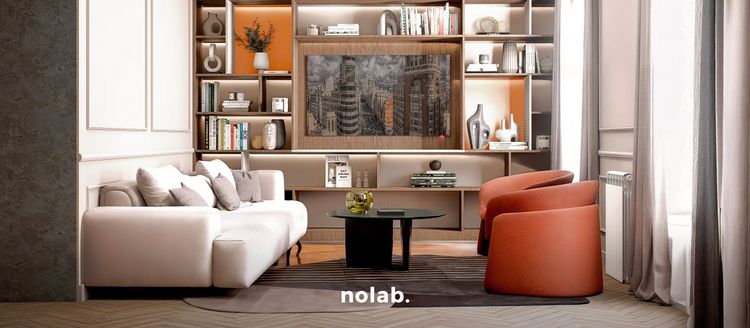
Discover Gta. Ruiz Giménez 5, the new fractional apartment in Madrid. Fractional ownership with 45 days of use and fractions from 335.000 €.
nov 26, 2025
6 min.