

Want to buy a property in Mexico? Discover below 7 options to buy a house in addition to a bank loan.
If, like most Mexicans, you describe success as the moment when you manage to acquire a patrimony, but the lack of savings or access to credit has made it an impossible dream, we have for you 7 options to buy a house in addition to a bank loan
We know that Infonavit and FOVISSSTE are not options for entrepreneurs, startups and those who work under the invoicing regime and that the loans require very high down payments.
According to 'Beyond Bricks' a study prepared by Kantar TNS, 94% of young people belonging to the millennial generation want to buy a home in the next 5 years. But, 66% have not saved enough to be able to make a down payment.
Don't worry! There is something more than INFONAVIT or acquiring a bank loan.
Casa Bravo is a prelude to a mortgage loan, which, through renting, advances the process of buying a home.
This scheme helps the client to raise enough money for the down payment on the property he/she has previously chosen. But how does it work? Through a fixed monthly amount that the tenant must meet as part of the rent and another amount called property points, which is a kind of savings fund for the down payment.
Although it is not yet a broad or very common concept in Mexico, there is a concept known as a housing cooperative that is in vogue in places such as Switzerland.
A housing cooperative is a non-profit entity formed by a group of people who, with the support of a manager, join together to access housing with the best possible quality and cost conditions.
Through a development bank known as Sociedad Hipotecaria Federal , the government offers greater credit and better financing for those seeking to purchase a home. This without the need to have a housing sub-account.
This model has several benefits such as: fixed rate, prepayments (without penalties), tax deductible and terms ranging from 5 to 25 years, and for those who are incorporated into the tax incorporation regime: competitive rate and additional subsidy that goes to the payment of a monthly installment of the loan each year.
The requirements are very similar to those of a mortgage loan: have a good credit history, be able to prove income and a minimum down payment of 10%. Not to mention the expenses involved in a purchase such as deeds and taxes.
An opportunity house is a house that is available for adjudication, either by auction, bidding or auction through a judicial act. They can have a discount of up to 60% of their value.
While this option is tempting, it requires a lot of research and backup, as there are many frauds involved. It is important to check that the property is really part of an adjudication, that it is in good condition and that it does not have unpayable debts.
These foreclosures also include houses that were retained by INFONAVIT or by the bank due to delays in the payment of their respective loans. This shows that it is very important to have a prior plan and budget.
Real Estate Financing is a system where participants help each other with their monthly contributions to cover their financing needs. And when you manage to cover 40% of the cost of your property, you can start the purchase process.
The advantage is that no interest is paid, no credit history is reviewed, there is no prepayment penalty and the requirements are not complicated.
However, many specialists believe that with a good savings and investment system this could be achieved individually without depending on third parties.
During the Covid19 pandemic, the real estate crowdfunding trend emerged very strongly. A method that through technological platforms gives developers, investors and people who wish to build their assets the opportunity to access the purchase of real estate without the need to invest so much money.
While this model is good for anyone looking to own real estate as an investment, it is important to do a thorough research of the different platforms and make sure they are regulated by the Fintech Law.
While these are options for investing or obtaining real estate, the culture of saving should be a constant in everyone's life.
Remember to save at least 20% of your monthly income.
We hope you can fulfill your dream.

Receive the latest news and updates directly in your inbox.

Alfredo Obregón is the co-founder and CEO of Nolab, a real estate platform focused on investment, sales, and property management across international markets.
jul 7, 2026
5 min.
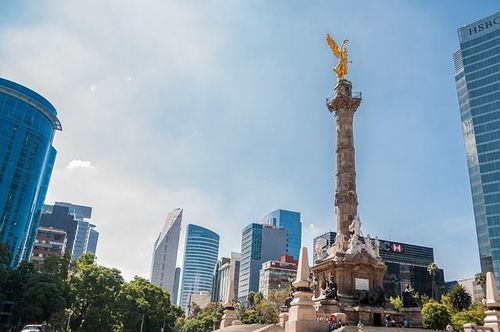
For years, to talk about investing in CDMX was to talk about opportunities. Today, more and more, it means talking about strategy and decisions with real and tangible results in a market that is constantly evolving. The city's real estate market did not stop, but it did change pace: it stopped rewarding intuition and began to demand a reading of context, understanding of the product and clarity about the moment of the cycle. Right now, in 2026, it is no longer just a matter of "investing" or "entering" CDMX, but of knowing where, how and under what logic to do so. Because the city is not growing uniformly: some areas are consolidating as stable and liquid investments, while others are beginning to reconfigure and deserve strategic attention, not impulsive bets. CDMX heading into the future: what is really driving the market? Real estate investment in Mexico City is not experiencing an isolated boom; rather, buyers are now facing an urban reorganization. Demand is increasingly concentrated in well-connected areas, with services, access to employment and real rental capacity. At the same time, the city is pushing towards verticalization, densification and the development of projects that are more efficient in size, operation and maintenance. Added to this are external factors that put pressure on demand: labor mobility, the arrival of foreign capital, international events, which results in a more informed consumer who compares, questions and prioritizes liquidity, so the market is transformed, becoming less emotional and more selective. How to read capital gains in 2026 so as not to confuse luck with strategy. Talking about capital gains without context is one of the most common mistakes when evaluating an investment. In 2026, the capital gain in CDMX is not only explained by "fashion", but by infrastructure, services, perception of safety, connectivity and urban narrative. And above all, by verifiable data that separates speculation from real growth. The analysis of the real estate market between 2023 and 2025 reveals a clear phenomenon: Mexico City is experiencing a reorganization of its demand, where consolidated premium areas maintain stability and high prices, while emerging neighborhoods capture the flow of capital displaced by the rising prices of traditional centers.
jan 7, 2026
12 min.

Discover Gta. Ruiz Giménez 5, the new fractional apartment in Madrid. Fractional ownership with 45 days of use and fractions from 335.000 €.
nov 26, 2025
6 min.