

Learn about 5 technology trends for the real estate industry that are changing the rules of the game.

Better user experiences, more security and flexibility in the customer journey are fundamental concepts in the new digital era for industries around the world. In the specific case of the real estate sector, the latest technological developments are currently being integrated to improve quality, profitability and confidence during the sale of real estate. That's why today we bring you 5 technology trends for the real estate industry in 2022 .
The emergence of new technologies and the great acceptance by people has led to the birth of new types of projects. For example, new financial organizations are referred to as Fintech, and new real estate entities as Proptech(Property Technology). The latter can be defined as a new type of company dedicated enterely to generating technological solutions for the real estate sector. That said, today we bring you;
Within the technological trends for the real estate industry, CRM (Customer Relationship Management) plays a fundamental role. Mainly because they facilitate business insight, drive strategic alliances with other organizations and help connect customers with specialists in less time. All this makes real estate a highly scalable business model and, for the end user, provides better experiences throughout the buying and/or selling process.
People interested in purchasing real estate expect to be able to make it their home by integrating everything that meets their needs and aspirations. Thanks to the new opportunities offered by technology in augmented reality and 3D modeling, it is possible to create renderings that are much more faithful to reality, and thus provide security in purchasing decisions.
What happens if a person in Mexico is interested in acquiring a property in Spain, but does not have the time to visit it? While photographs today offer impressive detail, virtual tours allow you to size up and appreciate a house or apartment that is hundreds, even thousands of miles away. Making the purchasing process extremely customer-friendly.
For real estate consultants, it is not enough to offer the best possible service; it is important to anticipate people's needs and offer high-value options in different budget ranges, as well as to resolve doubts as soon as possible in order to make decisions. This is possible with intelligent assistants and optimized databases, capable of delivering precise answers to general and particular requirements.
These security mechanisms can already be integrated through Smart Contracts, which integrate facial, fingerprint, voice or even retina scan biometric validation mechanisms. In addition, the implementation of digital credentials to validate the identity of individuals allows a much more secure process in the agreements, even collecting evidence in images and videos that can be stored in the cloud.

Receive the latest news and updates directly in your inbox.

Alfredo Obregón is the co-founder and CEO of Nolab, a real estate platform focused on investment, sales, and property management across international markets.
jul 7, 2026
5 min.
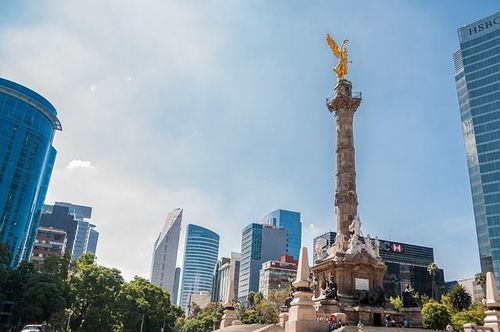
For years, to talk about investing in CDMX was to talk about opportunities. Today, more and more, it means talking about strategy and decisions with real and tangible results in a market that is constantly evolving. The city's real estate market did not stop, but it did change pace: it stopped rewarding intuition and began to demand a reading of context, understanding of the product and clarity about the moment of the cycle. Right now, in 2026, it is no longer just a matter of "investing" or "entering" CDMX, but of knowing where, how and under what logic to do so. Because the city is not growing uniformly: some areas are consolidating as stable and liquid investments, while others are beginning to reconfigure and deserve strategic attention, not impulsive bets. CDMX heading into the future: what is really driving the market? Real estate investment in Mexico City is not experiencing an isolated boom; rather, buyers are now facing an urban reorganization. Demand is increasingly concentrated in well-connected areas, with services, access to employment and real rental capacity. At the same time, the city is pushing towards verticalization, densification and the development of projects that are more efficient in size, operation and maintenance. Added to this are external factors that put pressure on demand: labor mobility, the arrival of foreign capital, international events, which results in a more informed consumer who compares, questions and prioritizes liquidity, so the market is transformed, becoming less emotional and more selective. How to read capital gains in 2026 so as not to confuse luck with strategy. Talking about capital gains without context is one of the most common mistakes when evaluating an investment. In 2026, the capital gain in CDMX is not only explained by "fashion", but by infrastructure, services, perception of safety, connectivity and urban narrative. And above all, by verifiable data that separates speculation from real growth. The analysis of the real estate market between 2023 and 2025 reveals a clear phenomenon: Mexico City is experiencing a reorganization of its demand, where consolidated premium areas maintain stability and high prices, while emerging neighborhoods capture the flow of capital displaced by the rising prices of traditional centers.
jan 7, 2026
12 min.

Discover Gta. Ruiz Giménez 5, the new fractional apartment in Madrid. Fractional ownership with 45 days of use and fractions from 335.000 €.
nov 26, 2025
6 min.